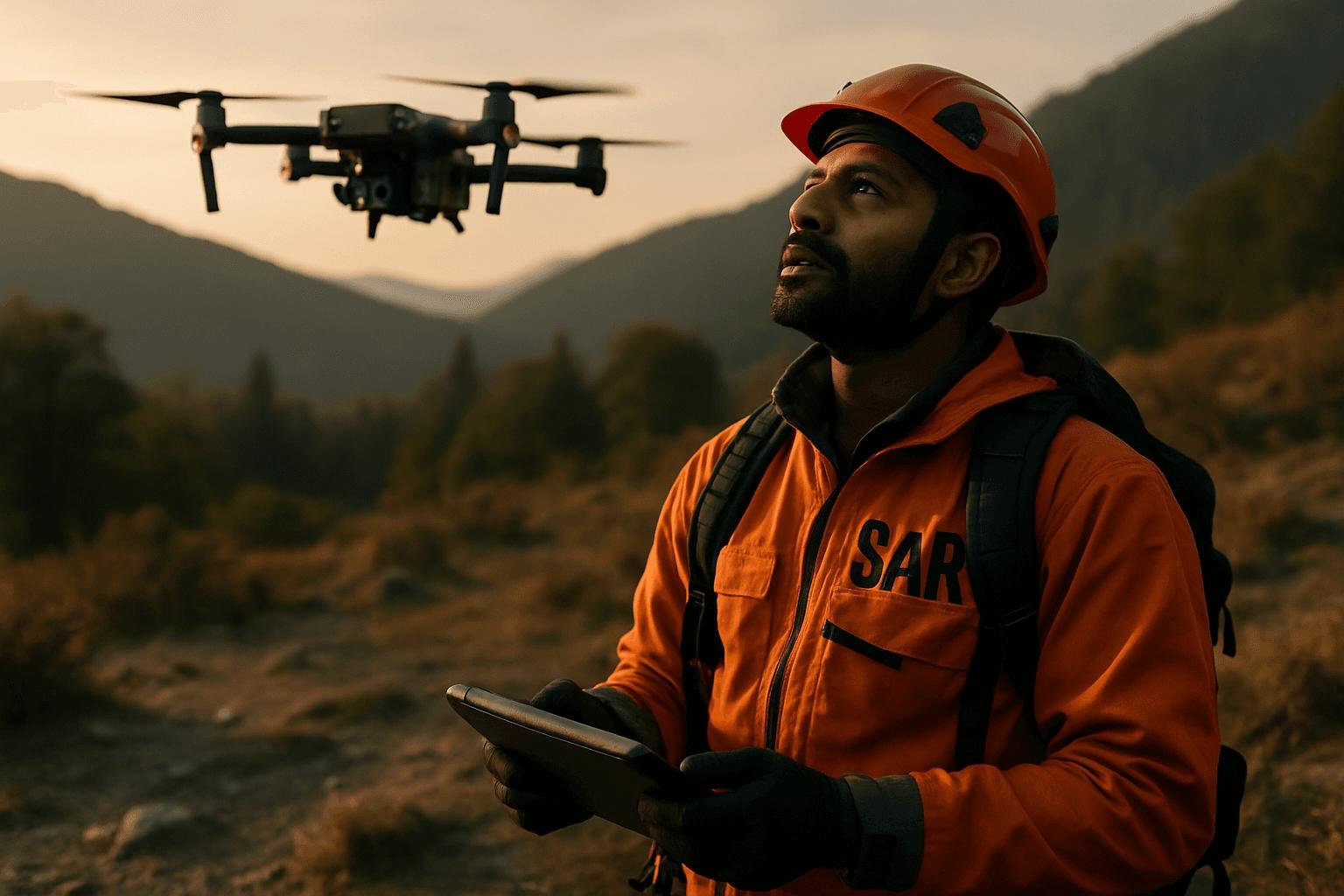
Emergency response teams today face increasingly complex search and rescue challenges. Natural disasters, remote-area emergencies, missing person cases, and large-scale incidents often require fast coordination and accurate situational awareness. In many rescue scenarios, responders must operate in difficult terrain where visibility is limited and communication systems may be unreliable. To improve response efficiency, organizations are turning to advanced technologies such as SAR Drone platforms and intelligent Direction Finder systems.
Traditional search operations can consume significant time and manpower. Rescue teams may need to cover large areas manually while navigating forests, mountains, damaged infrastructure, or flooded environments. In critical situations, delays in locating individuals can reduce rescue effectiveness and create additional risks for both victims and responders.
A SAR Drone helps emergency teams overcome many of these operational difficulties. By providing aerial visibility, drones allow rescue organizations to monitor wide search areas quickly and gather real-time information from above. This aerial perspective improves situational awareness and helps teams coordinate operations more efficiently during time-sensitive missions.
Modern SAR Drone systems are capable of reaching remote or hazardous locations that may be difficult for ground teams to access immediately. They can support rescue operations during severe weather conditions, natural disasters, and large-scale emergency incidents where rapid deployment is essential.
While aerial visibility is extremely valuable, rescue teams often require more than visual information alone. In many emergency situations, locating radio-based signals can help responders identify the position of missing individuals or emergency communication devices. This is where Direction Finder technology becomes an important operational tool.
A Direction Finder is designed to detect the direction of radio signals and help operators track signal sources more accurately. When combined with a SAR Drone, the technology allows responders to conduct aerial signal searches across large environments in real time.
This integration creates a much more efficient search process. Instead of relying solely on visual observation or manual searching, rescue teams can use signal direction data to focus their efforts on specific areas. This reduces operational delays and improves the overall speed of rescue missions.
The use of SAR Drone systems with Direction Finder capabilities is especially effective in remote search environments. Mountainous regions, forests, and disaster zones often make ground searches slow and difficult. Aerial signal detection provides an additional layer of awareness that supports faster and more accurate operational planning.
In wilderness rescue operations, for example, a SAR Drone can scan large sections of terrain while simultaneously monitoring for communication signals. If a signal is detected, rescue teams can quickly narrow down the search area and coordinate their response more effectively.
Another major advantage of drone-assisted rescue operations is improved Safety for emergency responders. Entering unstable structures, flooded regions, or hazardous terrain without operational awareness can place rescue personnel at significant risk. Drones allow teams to assess environmental conditions remotely before deploying ground units into dangerous areas.
Direction Finder systems also support better coordination by helping teams understand signal movement and possible source locations. This information improves decision-making and allows emergency coordinators to allocate resources more efficiently during active missions.
Artificial intelligence is beginning to play a larger role in advanced rescue technology as well. AI-powered systems can help analyze operational data, detect movement trends, and assist operators in identifying important information more quickly than traditional monitoring methods.
The future of emergency response is moving toward integrated awareness platforms that combine aerial mobility, signal detection, and intelligent operational support into a single system. SAR Drone technology paired with Direction Finder capabilities represents a major advancement in this evolving field.
Public safety organizations, humanitarian agencies, and rescue teams continue to invest in technologies that improve response speed and operational efficiency. Real-time aerial awareness and signal tracking are becoming essential tools for modern search and rescue missions.
As emergency situations become more demanding, rescue organizations will increasingly depend on intelligent systems that help teams operate faster and more effectively. SAR Drone and Direction Finder technologies are helping shape the future of emergency response by improving search accuracy, reducing operational delays, and supporting safer rescue operations in challenging environments.
Congrats! You’ve Completed This Blog. 👏